
Guzor district administration
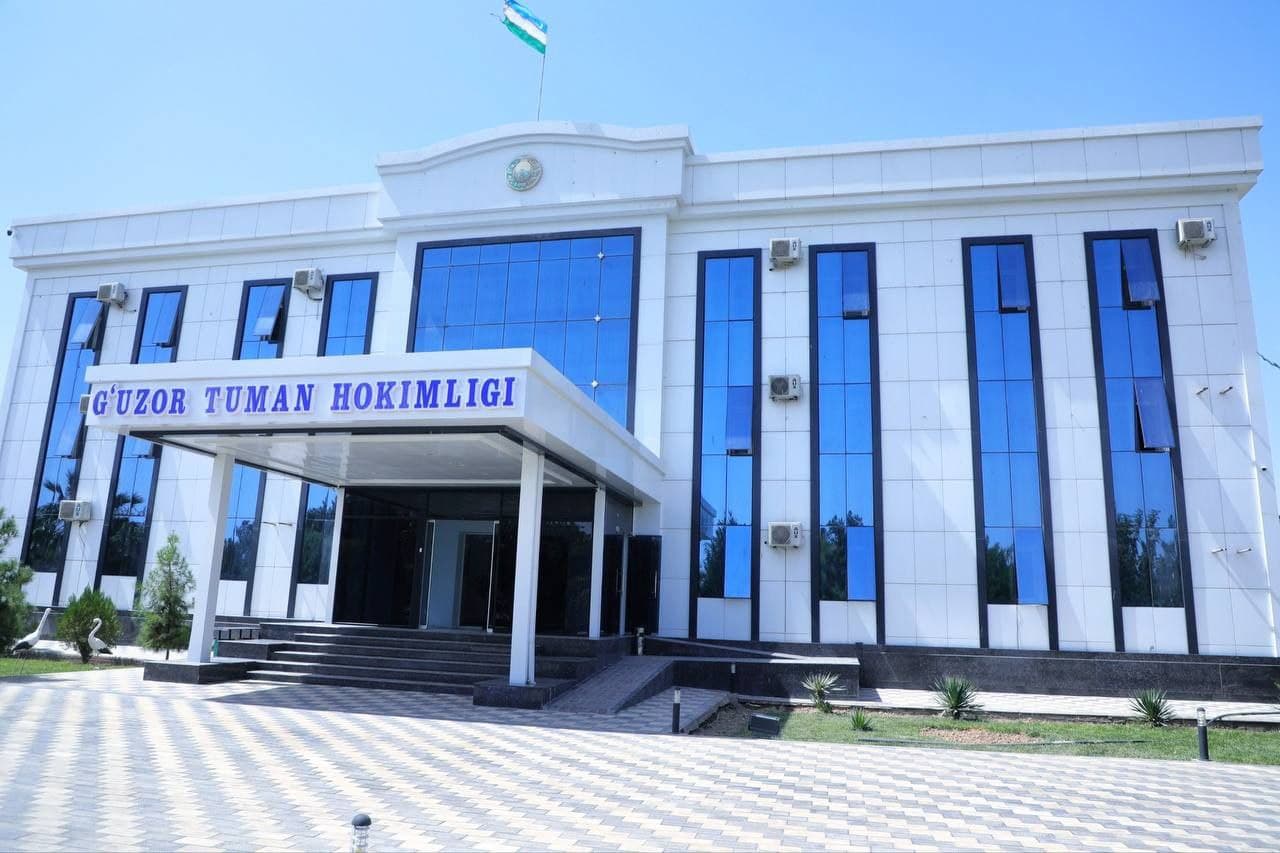
Guzar district - was established on September 29, 1926. The total area is 2.7 thousand km2. The border length is 326.2 km.
The population is 222 thousand people (as of 01.01.2025). The number of households is 42.1 thousand. Mainly Uzbeks, but also Tajiks, Tatars, Russians and representatives of other nationalities live there.
Bordering territories - Kamashi, Chirakchi districts to the north, Dekhkanabad to the east, Karshi and Nishan districts to the west, and the border with the Republic of Turkmenistan to the south.
The district center is the city of Guzar. There are 51 mahalla citizens' gatherings, 5 towns and 86 rural settlements in the district.
(Gulshan, Eskibog, Chakar, Jarariq, Yakkadarakht, Yankishlok, Gulistan, Istiqbol, Doltali, Tashguzar, Chugurtma, Fayziabad, Mevazor, Dustlik, Navruz, Sherali, Dashtabad, Yangihayot, Pachkamar, Chorvador, Obihayot, Amon Ata, Halkabog, Yangiabad, Batosh, Muminabad, Apardi, Boston, Khumdon, Avganbog, Yargunchi, Mustakillik, Chanak, Zarbdor, Qovchin, Sovligar, Shakarbulak, Yangikent, Sovbog, Tinchlik, A. Temur, Abod, Mehnatabad, Chumichli, Tengdash, Karakul, Zhanbulak, Eshankuduk, Buyuk Karvan, Pakhtazor, Khojaguzar mahalla citizens' meeting).
Nature - Guzar district is located in the southeast of Kashkadarya region, in the middle reaches of the Kashkadarya. The Guzardarya basin is located in the Guzar Hills and foothills. The Langar-Karael Mountains, the most extreme southwestern branches of the Hissar Mountains, have an average height of 800–850 meters. These low mountains on the banks of the Pachkamar reservoir are oriented from northeast to southwest, have flat sides, and are connected to the Guzar Hills, which have an absolute height of 430–750 meters. The ground of the hills is covered with Quaternary loess rocks, and the bottom is composed of gravel and conglomerate layers.
The gas and gas condensate deposits with large reserves in the Guzar district and the adjacent Kamashi, Karshi and Nishan districts form the richest pre-Hissar region of the oil and gas region in Uzbekistan.
The climate is continental. The average annual temperature is 16°. The average temperature in January is 1.9°, the lowest temperature is -23°. The average temperature in July is 26.6°, the highest temperature is 46°. The average annual precipitation is 285 mm. Most of the precipitation falls in the spring and winter seasons. The vegetation period is 272 days.
The Kashkadarya River flows through the northern edge of the district. The Guzardarya River and its tributaries are the Big Ura-Darya and the Small Ura-Darya. The Pachkamar reservoir has been built in the district. The soils are light and typical gray soils.
Among the wild plants in the plains, mainly sedge, sedge, sedge, sedge, pea, istaran, sedge, yantok, yulgin, namatak, hawthorn and other plants grow in the mountainous part.
From wild animals, fox, wolf, rabbit, deer, wild boar, from birds, sparrow, crow, quail, partridge, chil, hawk, eagle; mouse, rat from rodents; Among the reptiles, there are various poisonous and non-poisonous snakes, echkemar, lizards, carp, lakka, blackfish are found in the reservoirs.