
About the Hokimiyat
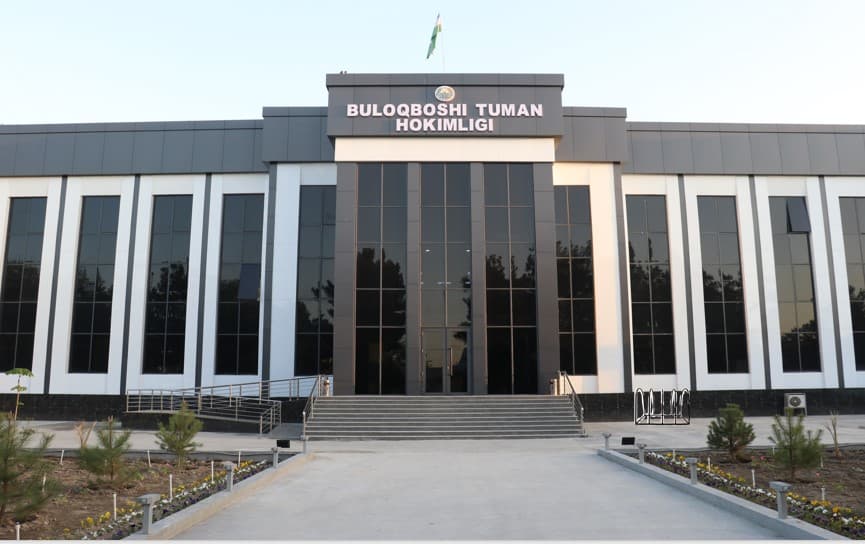
State Administration in the Republic of Uzbekistan
State administration in the Republic of Uzbekistan is organized through three branches of power: the legislative, the executive, and the judicial.
-
The Legislative Branch is represented by the Oliy Majlis, which consists of a lower and an upper chamber.
-
The lower chamber, the Legislative Chamber, consists of 150 permanently operating deputies whose primary responsibility is drafting legislation.
-
The upper chamber is the Senate, comprised of 100 senators (as per the text). Senators convene periodically without discontinuing their primary professional or official duties to review and approve new laws passed by the Legislative Chamber.
-
-
The Executive Branch is led by the Cabinet of Ministers and includes ministries, departments, as well as the hokimiyats (administrations) of Tashkent city and the regions. In short, the executive branch is responsible for ensuring the execution of laws on the ground.
-
The Judicial Branch includes all courts operating in various fields, headed by the Supreme Court of the Republic of Uzbekistan. The courts ensure the prevention of law violations by both executive bodies and citizens.
Activities of the District Hokimiyat
The district hokimiyat ensures the socio-economic development of the district. It guarantees the implementation of the Laws of the Republic of Uzbekistan, resolutions of the Oliy Majlis, decrees, resolutions, and orders of the President of the Republic of Uzbekistan, resolutions of the Cabinet of Ministers, as well as resolutions, orders, minutes, and instructions of the district Kengash (Council) of People's Deputies and the district hokim.
In its activities, the district hokimiyat is accountable to the President of the Republic of Uzbekistan, the Cabinet of Ministers, and the district Kengash of People's Deputies.
The exercise of the district hokimiyat's powers is ensured through the organizational and practical work of the district hokim, deputy hokims, heads of local state administration bodies, permanent and temporary commissions of the hokimiyat, other working bodies established by relevant decisions, and the management apparatus of the hokimiyat.
The activities of the district hokimiyat are organized by the district hokim. Within the scope of powers defined by legislation, the district hokim issues decisions that are mandatory for execution by all bodies, enterprises, organizations, institutions, officials, and citizens within the territory.
-
Documents of the district hokim that are normative or of significant importance are adopted in the form of decisions (qaror).
-
Documents regarding operational and other current issues are adopted in the form of orders (farmoyish).
The Management Apparatus of the Hokimiyat
Pursuant to the Presidential Resolution No. PP-3407 dated November 28, 2017, "On Improving the Activities of Local Executive Authorities in Widely Attracting Investments and Introducing Innovations," the tasks, functions, rights, responsibilities, and operational procedures of the district hokimiyat's management apparatus are established.
In its activities, the management apparatus is guided by the Constitution of the Republic of Uzbekistan, the Law of the Republic of Uzbekistan "On Local State Power," other laws of the Republic of Uzbekistan, resolutions of the chambers of the Oliy Majlis, decrees, resolutions, and orders of the President, resolutions and orders of the Cabinet of Ministers, other legislative acts, documents of the Kengash of People's Deputies and the hokim, as well as the Regulation on the Management Apparatus of the Bulokboshi District Hokimiyat.
The management apparatus provides information-analytical, legal, organizational-technical, and financial-economic support for the hokimiyat's activities. It also provides organizational, technical, and other services for the activities of the Kengash of People's Deputies.
The apparatus of the district hokimiyat operates in compliance with the Constitution of the Republic of Uzbekistan, the Law "On Local State Power," the Presidential Resolution No. PP-3407 dated November 28, 2017, and the "Instruction on Clerical Work and Organizing Control over the Execution of Documents in the Apparatuses of the Council of Ministers of the Republic of Karakalpakstan, and Hokimiyats of Regions, Cities, and Districts of the Republic of Uzbekistan" (approved by Cabinet of Ministers Resolution No. 140 dated March 29, 1999), as well as the regulations of the district hokimiyat.
Clerical work regarding the suggestions, applications, and complaints of citizens is carried out on the basis of the Law of the Republic of Uzbekistan "On Appeals of Physical and Legal Persons."