
Chief of the Khiva City Internal Affairs Department, Lieutenant Colonel, on the Results
2025-05-04 20:25:00 / Statements and speeches of administration
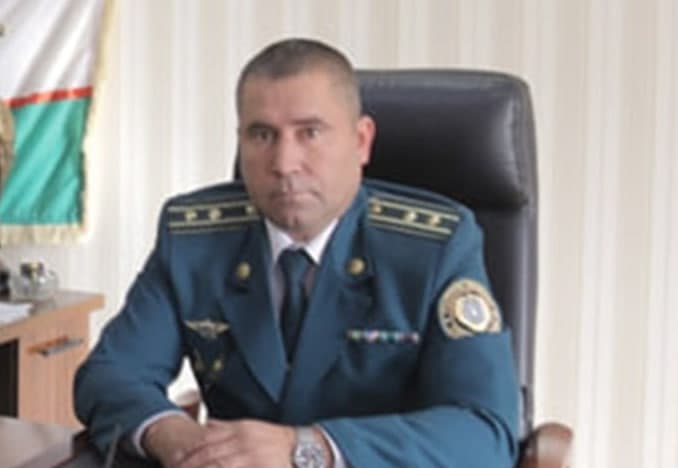
Address by Lieutenant Colonel B.N. Otajanov, Head of the Khiva City Internal Affairs Department, on the Results of Measures Taken to Prevent Crime and Offenses in the City During the First Three Months of 2025 and Future Actions to be Implemented
Assalomu alaykum, participants of the meeting!
In the first quarter of 2025, in collaboration with law enforcement agencies and public organizations, a series of measures were implemented under the principle of “Prosperous and Safe Neighborhood” to prevent offenses and combat crime. Special rapid-response preventive operations, including “Safe Territory,” “Control,” “Night,” “Family,” “Household,” and others, were conducted.
In neighborhoods, every household was visited to assess the family environment, living conditions, and issues, with measures taken to address them. Targeted preventive awareness efforts were carried out to foster the mindset among citizens that “No crime should occur in my neighborhood.”
During the first quarter of 2025, 35 crimes (13) were recorded in the city. Of these, 8 (23%) were preventable, 16 (46%) were solvable, and 11 (31%) were committed using information technologies.
Preventable crimes increased by 100% (from 4 to 8), including theft (from 1 to 2), fraud (from 0 to 2), hooliganism (from 0 to 1), non-payment of alimony (from 0 to 1), and sexual relations with a person under 16 (from 0 to 1). Road traffic accidents resulting in fatalities (1/1) remained unchanged.
No preventable crimes from a list of 47 types were recorded in neighborhood areas. Of the 21 neighborhoods, 2 were classified as “red,” 2 as “yellow,” and 17 as “green.”
In line with the implementation of Presidential Decree No. PQ-1 dated January 3, 2025, titled “On Measures to Create a Safe Environment in Republic Neighborhoods in 2025 and Further Enhance the Effectiveness of the System for Early Prevention of Offenses,” systematic efforts involving all relevant agencies are underway in the city to prevent crimes early and ensure a safe environment.
An analysis of crimes committed in 2024 identified five neighborhoods with challenging criminogenic situations. Specific regional and city-level leaders were assigned to these areas to conduct targeted efforts, fully ensuring the establishment of a safe environment by mobilizing all available resources.
As part of the decree’s implementation, 88 surveillance cameras were installed in crowded public areas and streets, 7 PTZ cameras in the courtyards of multi-story buildings, 2 at main neighborhood entry and exit points, 3 in shopping centers and markets, 7 at school entrances, and 4 in open sports fields.
Additionally, 23 intercom systems were installed at the entrances of multi-story buildings, 202 multi-story and private residences were placed under the technical protection of the National Guard, 6 panic buttons were installed at the entrances of multi-story buildings, and 30 commercial and service facilities were also placed under National Guard technical protection. Furthermore, 14 “model safe streets” and 36 “model safe pathways” were established.
A total of 902 individuals prone to committing offenses or at high risk of becoming victims were identified and entered into the “E-Social Prevention” electronic information system, with joint conclusions drawn for 578 of them.
Through social media platforms, crime prevention awareness campaigns reached 40,928 neighborhood residents aged 18 and older, 418 healthcare workers, 2,258 preschool education staff, 1,500 general education staff, and approximately 995 employees of other institutions. These efforts were conducted via Telegram groups, as well as through 8 LED monitors in the city, 5 bank monitors, and 2 monitors in medical facilities, displaying prevention-focused videos and promotional materials.
The department’s 22 prevention inspectors have established a system of addressing residents through “video appeals” in neighborhood Telegram groups during the weekly “Prevention Day” to promote early crime prevention.
To curb crime and stabilize the criminogenic situation, public order and safety in markets, public spaces, entertainment venues, and recreational parks are maintained through round-the-clock operations of 2 mobile patrols and 2 pedestrian patrols in the city.
To prevent theft, efforts to connect residential properties, commercial outlets, institutions, and organizations to centralized security systems were intensified, with 200 private residences and 87 institutions and organizations linked to the central security console.
Intellectual cameras (capable of facial recognition and vehicle license plate identification) are being installed and integrated at neighborhood entry and exit points, public spaces, entrances to government buildings, and other high-traffic areas across the city.
Additionally, in line with the directives issued during the video conference held by the Ministry of Internal Affairs of the Republic of Uzbekistan on February 14, 2025, regarding youth issues, 143 young individuals in the city were assigned mentors. They were individually paired with 14 senior staff members of the city’s Internal Affairs Department, meetings were held, and roadmaps were developed to address their challenges systematically.
To prevent offenses and crime among minors, the “Safe Childhood” Concept was introduced. Accordingly, speed-limiting road signs and artificial speed bumps were installed around 23 schools located near busy roads to ensure road safety.
Furthermore, portable pedestrian traffic lights were installed on roads in front of 23 general education schools in the city.
Moving forward, efforts to enhance collaborative measures for early crime prevention in the city have been outlined:
- Within the framework of the city’s “social prevention” system, compile conclusions on individuals likely to commit or be victims of offenses, with neighborhood councils taking measures for positive resolutions.
- In these neighborhoods, discuss not only crimes but also offenses committed by individuals within the community itself.
- Reassess and address the issues of drug addicts, individuals addicted to alcohol, dysfunctional families, and families on the verge of divorce, as registered with healthcare institutions, requiring special attention.
- In combating organized crime, conduct planned raids in areas where crimes are likely to occur, targeting individuals on the Internal Affairs Department’s special register.
- Intensify efforts to educate citizens on the benefits of connecting residences, commercial stores, and entertainment venues to security systems and installing panic buttons.