
A Modern Center Capable of Growing Millions of Saplings Annually Opens in Guzar
2026-10-21 21:20:00 / News
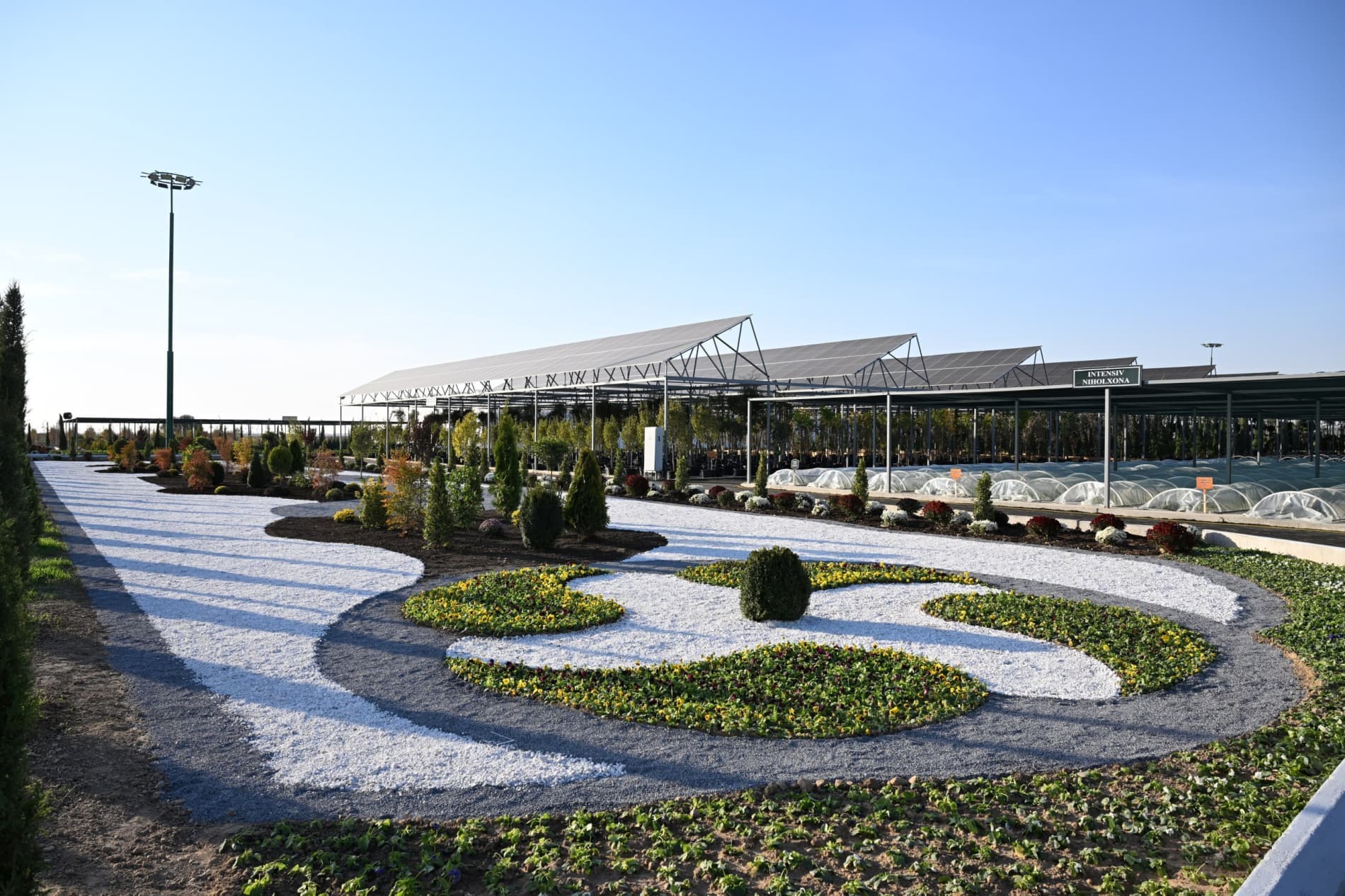

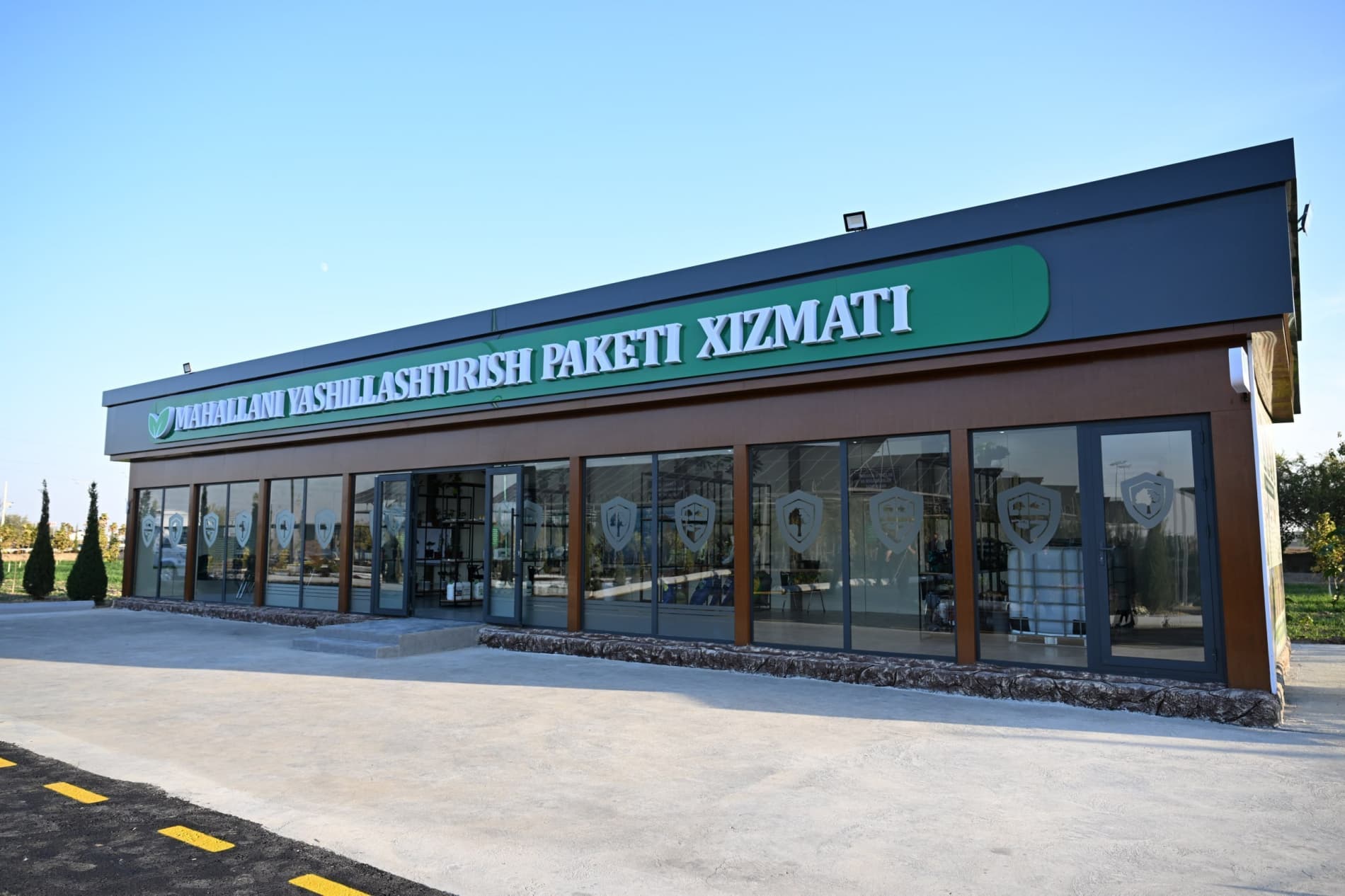
The center’s primary objectives are to supply mahallas (local communities) with high-quality saplings, expand green spaces, and turn nursery cultivation into a source of income for local residents. Modern infrastructure has been established to grow ornamental and fruit trees, shrubs, and flowers.
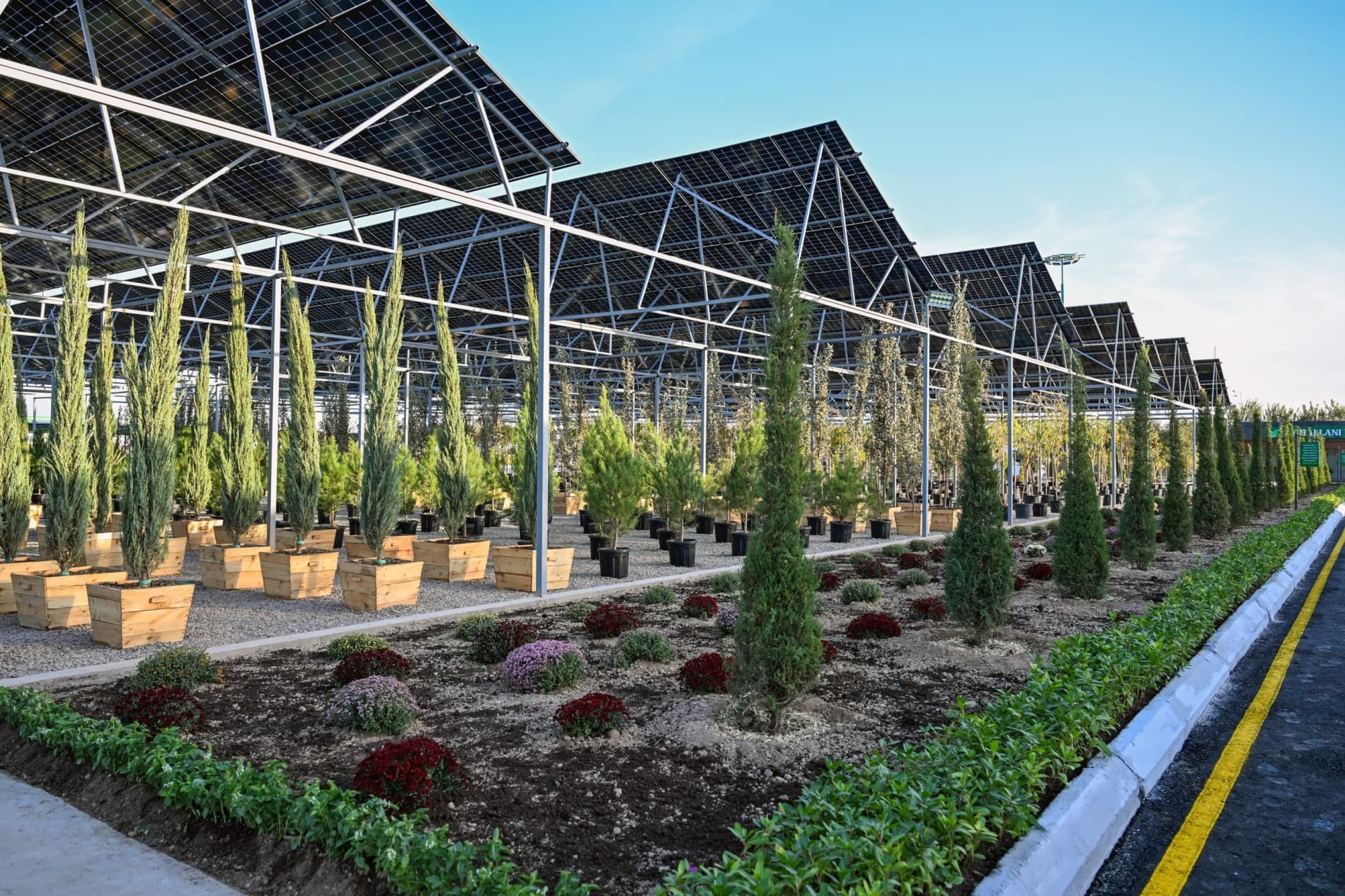
Built using international experience, the complex allocates 50 hectares for ornamental trees, 5 hectares for fruit trees, and 3 hectares for shrub and flower seedlings. During the first phase, the center plans to grow 1.6 million plants, with production expected to reach 5 million seedlings and saplings in the next phase. The center currently cultivates 41 varieties of ornamental and coniferous trees.
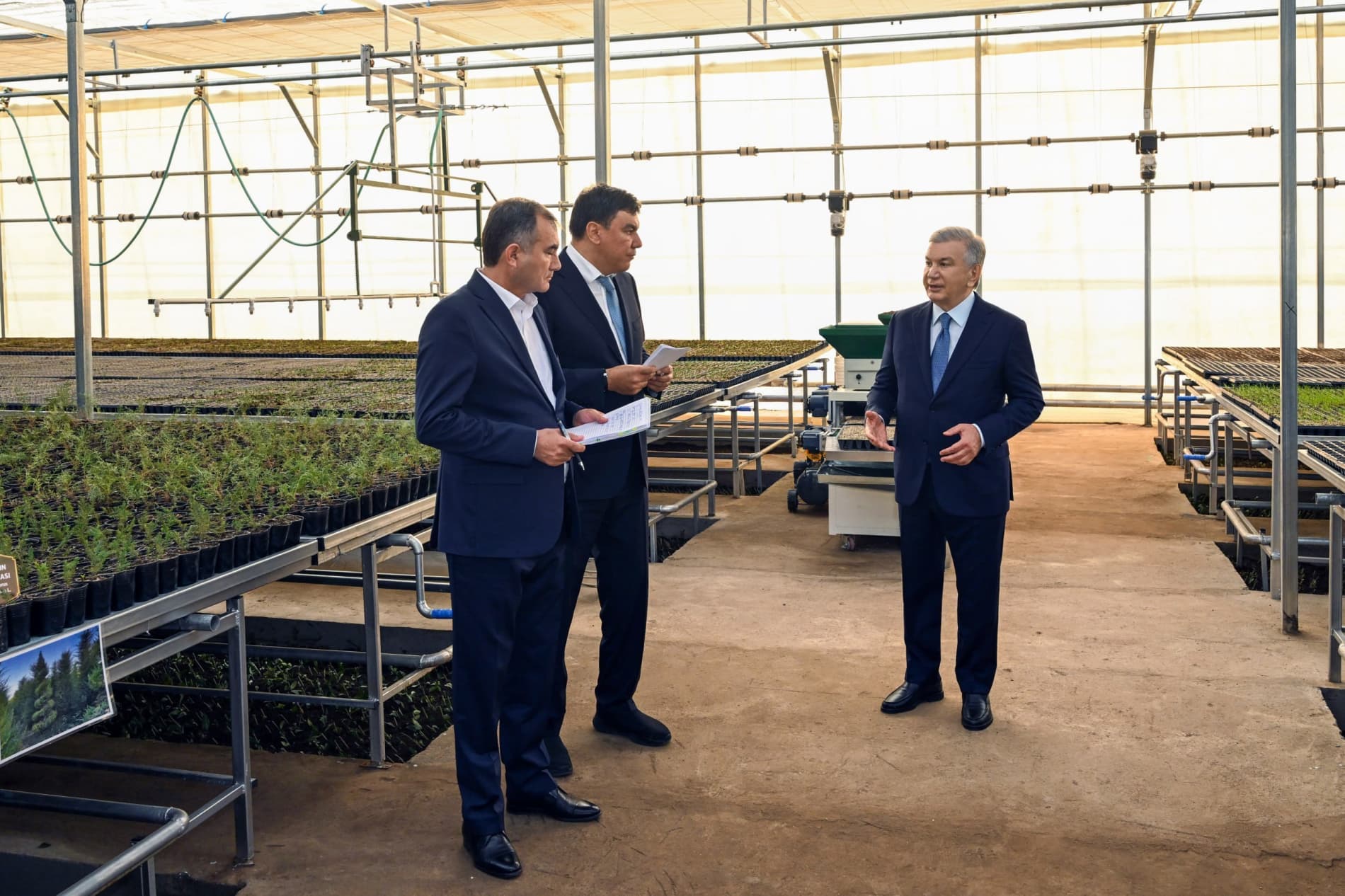
Open propagation areas, greenhouses, facilities for growing seedlings from seeds, and structures designed to provide shade for young plants enable uninterrupted production throughout the year. The combined capacity of three membrane-lined reservoirs is 4,200 cubic meters. In addition, a drip irrigation system has been introduced across 20 hectares.
Equipment for producing compost and mulch, along with solar panels, helps conserve resources. According to estimates, modern technologies could increase sapling production by 8–10 times compared with traditional methods while reducing water consumption threefold. As a result, the production cost of saplings is expected to decrease by 30–40 percent.
The center’s activities will extend beyond growing saplings. It will also provide services such as delivering tree and shrub saplings to mahallas, treating damaged trees, applying mulch, and installing drip irrigation systems.
A forestry mentor will be assigned to each mahalla. Training sessions will also be organized for members of the “Mahalla Seven” community leadership group before each planting season. These measures will help ensure that saplings are not merely planted but properly maintained, supporting the long-term preservation of green spaces.
Another important aspect of the project is engaging local residents in nursery cultivation. Under cooperative agreements, citizens will receive seedlings to grow at their homes for one or two seasons until they become ready-to-plant saplings. The mature saplings will then be purchased under guaranteed procurement arrangements.
This approach will create an additional source of income for families while helping establish sapling cultivation as an important sector of the local economy.
During his visit, the President emphasized that planting trees and establishing gardens are cherished traditions of the Uzbek people. The new complex combines these traditions with modern technologies, water-efficient irrigation methods, and a focus on the interests of local communities.