
5 OF THE MOST DANGEROUS ITEMS IN YOUR KITCHEN
2026-10-16 11:55:00 / News
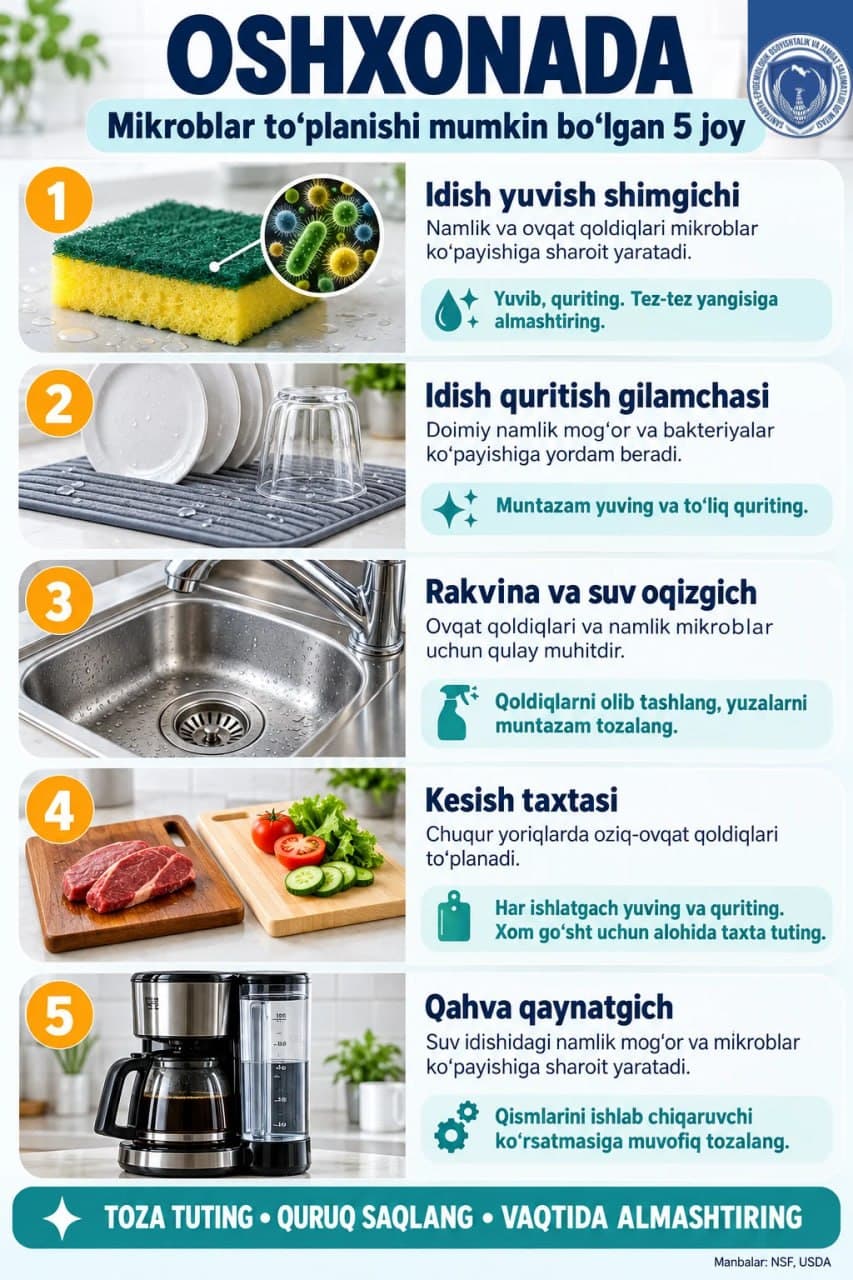
Number one — the ordinary dishwashing sponge.
Do you think the dirtiest place in your home is the toilet seat, where an army of harmful bacteria may be lurking?
Think again. German scientists have once again highlighted dishwashing sponges as one of the most favourable environments for bacterial growth. For several years, researchers have warned that bacteria can multiply rapidly in sponges. Studies have also reported potentially dangerous pathogens on sponges, including bacteria that may be resistant to antibiotics and capable of causing serious infections, such as meningitis and sepsis.
Furthermore, bacterial growth is not necessarily dependent on the sponge’s material. Whether the sponge is inexpensive or expensive, microorganisms can multiply on it during the first week of use. Researchers have tried treating sponge surfaces with various disinfectants, but these methods reportedly reduced bacterial numbers by no more than 60%. Treating a sponge in a microwave oven does not guarantee effective disinfection either.
What should you do?
Replace dishwashing sponges frequently and avoid using the same sponge for longer than one week.
Number two — the dish-drying mat.
Constant moisture creates favourable conditions for the growth of harmful bacteria and mould.
How can you prevent bacterial growth?
Clean the mat regularly and allow it to dry thoroughly. Whenever possible, choose drying methods that prevent water from accumulating on the surface.
Number three — kitchen sink drainpipes.
According to the figures cited, in 45% of cases, kitchen sink drainpipes may provide favourable conditions for bacterial growth.
Clean the drain regularly and use appropriate cleaning products according to the manufacturer's instructions.
Number four — the wooden cutting board.
According to research conducted by the US National Sanitation Foundation (NSF), 18% of all cutting boards were found to be contaminated with microorganisms. Food particles trapped in tiny cracks create a favourable environment for bacterial growth.
Wash the cutting board thoroughly after every use and clean it regularly. Use separate cutting boards for fruits and vegetables, meat, and fish.
Number five — the coffee machine.
Residual moisture in a coffee machine’s water reservoir creates favourable conditions for the growth of various bacteria and mould.
To reduce the risk of contamination, clean and maintain your coffee machine regularly, following the manufacturer's instructions. Remember to wash and dry removable components thoroughly.
Press Service of the Sanitary
and Epidemiological Committee