
BRIEFING SPEECH: “COMBATING THE SHADOW ECONOMY IS A DEMAND OF OUR TIME”
2026-09-24 14:10:00 / Press conferences
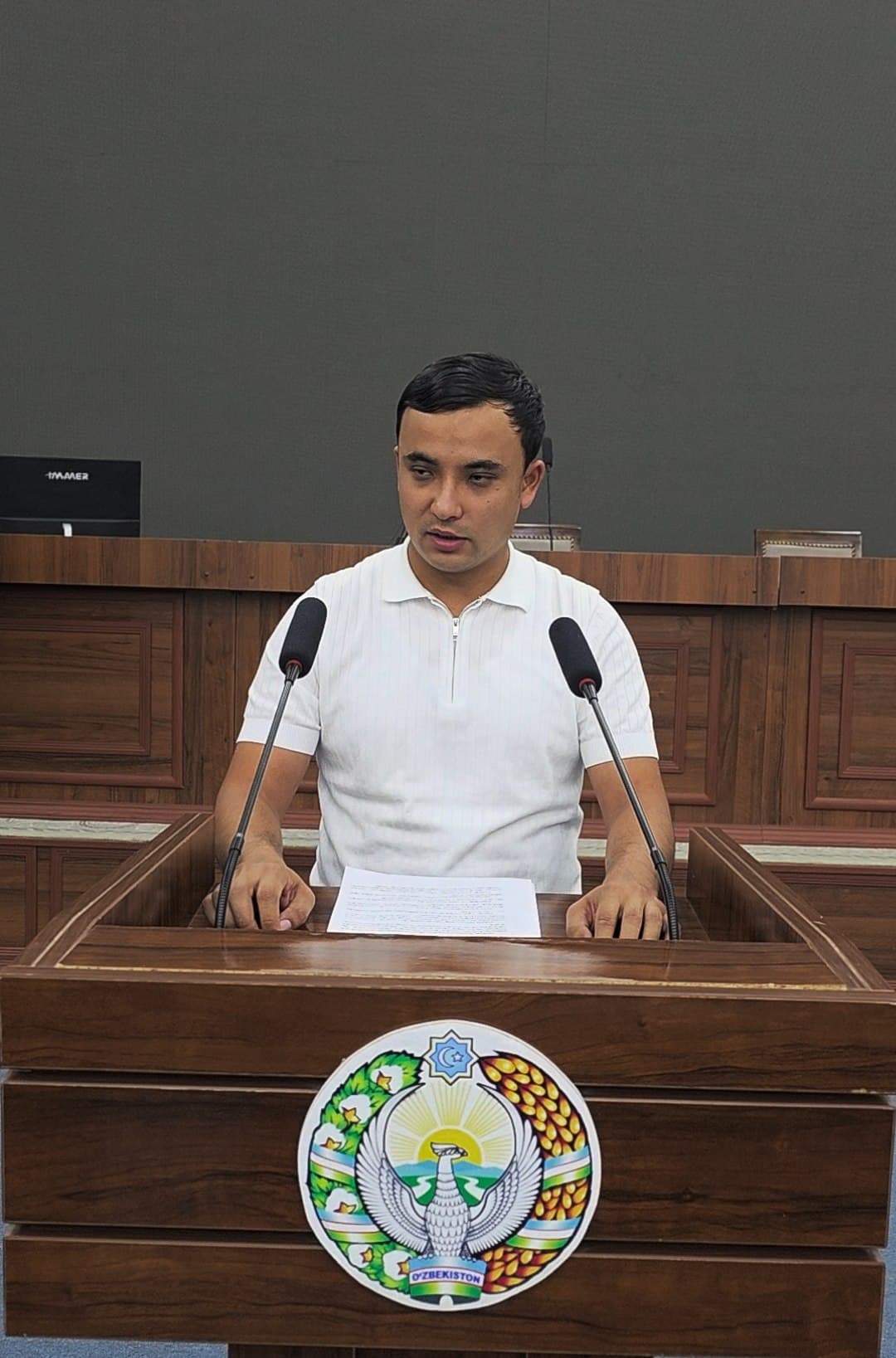
Assalamu alaykum, distinguished participants of the briefing!
The subject of today’s briefing is “Combating the Shadow Economy Is a Demand of Our Time.”
The shadow economy can be understood as the part of economic activity that is not fully recorded by the state, involves the concealment of income or is conducted without compliance with established legal requirements.
The existence of the shadow economy has a number of negative consequences for both the state and society.
Informal economic activity reduces the revenue that should be paid into the state budget and creates unequal competitive conditions for businesses operating legally. Informal employment may also prevent workers’ labour and social rights from being fully guaranteed.
Another important aspect of the shadow economy is that it may create conditions for corruption risks. Combating it is therefore not merely a matter of increasing tax revenue. It is also essential for ensuring the rule of law, fair competition and economic security.
Today, digitalization is one of the most important tools for reducing the shadow economy.
Electronic invoices, digital payments, online cash-register systems and the transition of public services to electronic formats are helping to increase the transparency of economic transactions.
Reducing the human factor through digitalization also makes it possible to limit unnecessary bureaucratic processes and corruption risks.
Modern technologies are creating new opportunities to reduce the shadow economy.
Electronic invoices, online cash registers, digital payments, electronic tax services and the integration of databases improve the ability to monitor and analyse economic transactions.
One of the main advantages of digitalization is the reduction of the human factor. The automation of public services and regulatory procedures can reduce direct contact between public officials and entrepreneurs, thereby helping to minimize corruption risks.
Digitalization alone, however, is not sufficient. Digital systems must be integrated, the data must be reliable and citizens’ rights must be properly protected.
At the same time, combating the shadow economy cannot rely solely on punitive measures.
In my view, the main emphasis should be placed on making legal economic activity as convenient as possible.
In other words, formally registering a business, paying taxes, submitting reports and fulfilling other obligations should be easier and more beneficial for entrepreneurs than operating informally.
The following measures are therefore important:
— further simplifying public services;
— reducing unnecessary administrative barriers;
— improving tax administration;
— reducing informal employment;
— developing electronic payment systems;
— improving the legal and financial literacy of entrepreneurs;
— reducing corruption risks.
Another important issue is that citizens themselves should become active participants in combating the shadow economy.
A customer requesting a receipt, an employee working under a formal employment contract and an entrepreneur conducting business legally may appear to be simple actions, but they are highly important for ensuring economic transparency.
In conclusion, combating the shadow economy is not solely the responsibility of government authorities. It is in the common interest of the state, businesses and citizens.
A legal and transparent economy is an important foundation for a strong budget, fair competition, guaranteed labour rights and sustainable economic development.
One of today’s key tasks is therefore to create conditions in which citizens and entrepreneurs, acting in their own interests, choose open and lawful economic activity instead of operating in the shadows.
Thank you for your attention!