Construction Documentation Is Being Transferred to an Electronic Format
2026-09-08 12:55:00 / News

Today, as in all other sectors, particular attention is being paid to the effective use of digital technologies in the construction industry.
The main purpose of this process is to simplify services, reduce unnecessary bureaucratic procedures, minimize the human factor, and improve the effectiveness of oversight.
In this regard, a number of important tasks were defined by Presidential Decree No. PF-104 of the President of the Republic of Uzbekistan dated June 4, 2026, “On Measures to Introduce Results-Based Management in the Construction Sector and Simplify Public Services in the Sector.”
In particular, the decree provides for simplifying the process of obtaining construction permits for citizens and entrepreneurs, reducing time and financial costs by up to half, further digitalizing the sector, and making extensive use of artificial intelligence capabilities.
Accordingly, practical work has also begun on the digitalization of executive documentation maintained in the construction sector.
From now on, the main types of construction documentation are being maintained electronically on the nazorat.mc.uz platform.
In particular, electronic “Author’s Supervision,” “General Works,” “Incoming Control,” and “Concrete Works” journals, as well as the “Concealed Works” act, have been developed and launched in test mode.
This innovation not only reduces the need for paper documents during construction, but also enables information to be entered and monitored more efficiently.
Construction documentation contains important information about the work carried out at a construction site. It records which materials were used, when and according to which technology the work was performed, and whether established quality requirements were complied with.
Therefore, maintaining such documentation accurately and on time is of great importance for construction quality control.
The transition to an electronic format makes it possible to organize this process more efficiently and transparently.
For example, information can be entered into the system on time, electronically approved by responsible personnel, and the progress of construction work can be monitored remotely.
Supervisory authorities will also have the opportunity to monitor the status of work at construction sites online.
In addition, the time required to store and search for paper documents will be reduced. The risk of documents being lost or subsequently altered will also decrease.
In order to explain the advantages of the new system to representatives of the construction sector, the Territorial Inspectorate for Construction and Housing and Communal Services Control of Samarkand Region is organizing practical seminars on site.
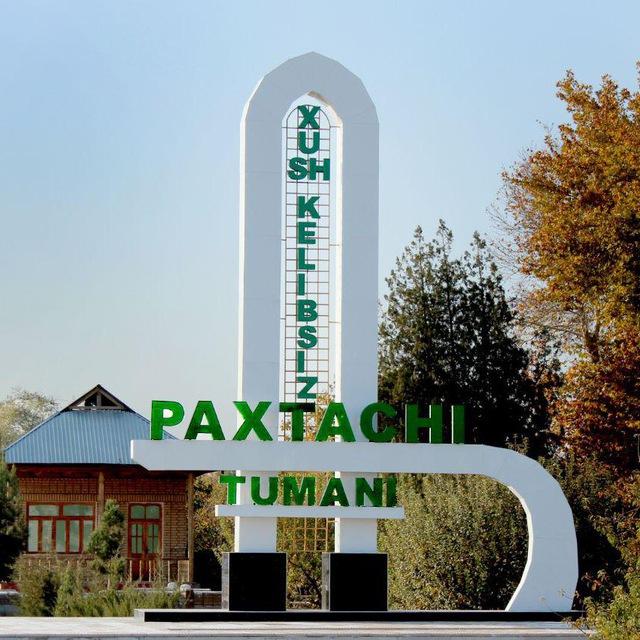
The latest seminar was held in Pakhtachi District.
During the seminar, participants in the construction process were informed about the procedure for using electronic journals and the “Concealed Works” act on the nazorat.mc.uz platform.
The process of preparing each document electronically was demonstrated to the participants in a practical and visual manner.
Participants also received answers from specialists to their questions. Suggestions for further improving the platform were also reviewed.
Importantly, today’s changes are not limited to electronic document management alone.
The digital system makes it possible to consolidate information about the construction process in one place, access it promptly, and conduct oversight remotely.
This, in turn, contributes to greater transparency in construction, reduces the human factor, and strengthens quality control.
Another important aspect of digitalization in construction is the efficient use of time and resources. As paperwork is reduced, the main focus of industry participants can increasingly be directed toward the quality of construction work and compliance with established requirements.
Thus, transferring construction documentation to an electronic format is one of the important steps in the digital reforms being implemented in the construction sector.
In order to ensure the widespread implementation of this system in practice, awareness-raising and practical seminars are continuing in the districts and cities of Samarkand Region.
The main goal is clear: to organize the construction process in a modern, transparent, efficient, and effective manner.