
MELON FLY
2026-06-29 13:00:00 / News
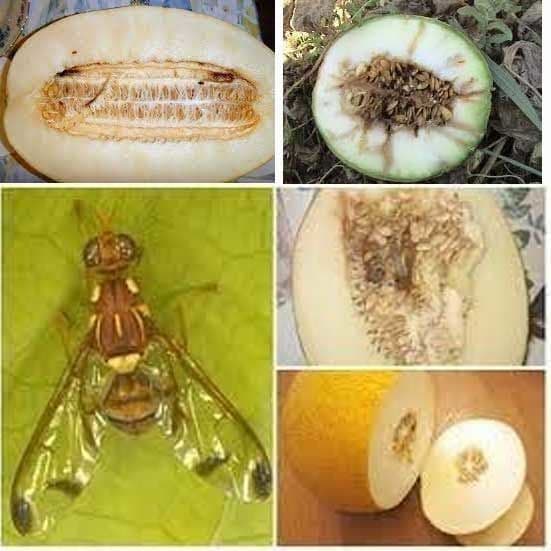
The Plant Quarantine and Protection Agency has announced a “Thirty-Day Urgent Campaign” from June 8 to July 8 of this year to combat the “Eastern Fruit Eater” (Grapholitha molesta) pest found in fruit orchards in the regions, the “Melon Fly” (Carpomya pardalina Bigot), which can cause serious damage to melon crops and reduce export volumes, and the weeds Dodder (Cuscuta.sp) and Creeping Clover (Acrooptilon repens D.C), which negatively affect the growth and development of cultivated plants. Within the framework of the “Thirty-Day Urgent Campaign”, district state phytosanitary inspectors are providing business entities and district residents with necessary recommendations on the dangerous harm of pests and weeds and countermeasures.
In recent years, the demand for melons grown in our country has increased, and export volumes are increasing. A number of pests and diseases cause serious damage to melon plants and their fruits. For example, the melon fly. The melon fly is a very dangerous pest that seriously damages melon fruits. It makes them unfit for consumption and loses their export value.
To effectively combat the melon fly, it is necessary to clean the fields planted with melon crops from plant residues at the end of the season and deeply bury the remaining melon fruits, reduce the fly's winter reserves by conducting deep autumn plowing, and irrigate the field for 4-5 days in the autumn-winter period, as in the case of salt washing. It is recommended not to replant melon crops for 3-4 years in fields where the melon fly is observed, and not to place fields planted with early and late ripening varieties close to each other.
Biological control of melon fly can also be effective. Today, natural analogues of this pest have been identified. Insects belonging to the family of goldfinches occupy a special place. Their use against melon fly is effective. Among melon crops, melon is susceptible to the effects of various insects and diseases, which can sharply reduce yield.
In pest control, it is important to clear the field of weeds, remove plant residues, follow irrigation standards, and introduce crop rotation. These methods naturally limit the reproduction of pests.
When the number of pests reaches the level of causing economic damage, insecticides and acaricides can be used on the recommendation of a specialist. When using chemicals, it is necessary to strictly observe safety rules and take into account the harvest period.
Pakhtachi District Plant Quarantine and Protection Department