
Subsoil Use in Uzbekistan: 432 Permits Issued, 169 Sites Sold at Auction
2026-11-09 14:30:00 / News
During January–October 2026, Uzbekistan issued 432 permits granting rights to use subsoil resources. Of the 303 mineral deposits and prospective areas offered through electronic auctions, 169 were sold for a total of 446 billion Uzbek soums.
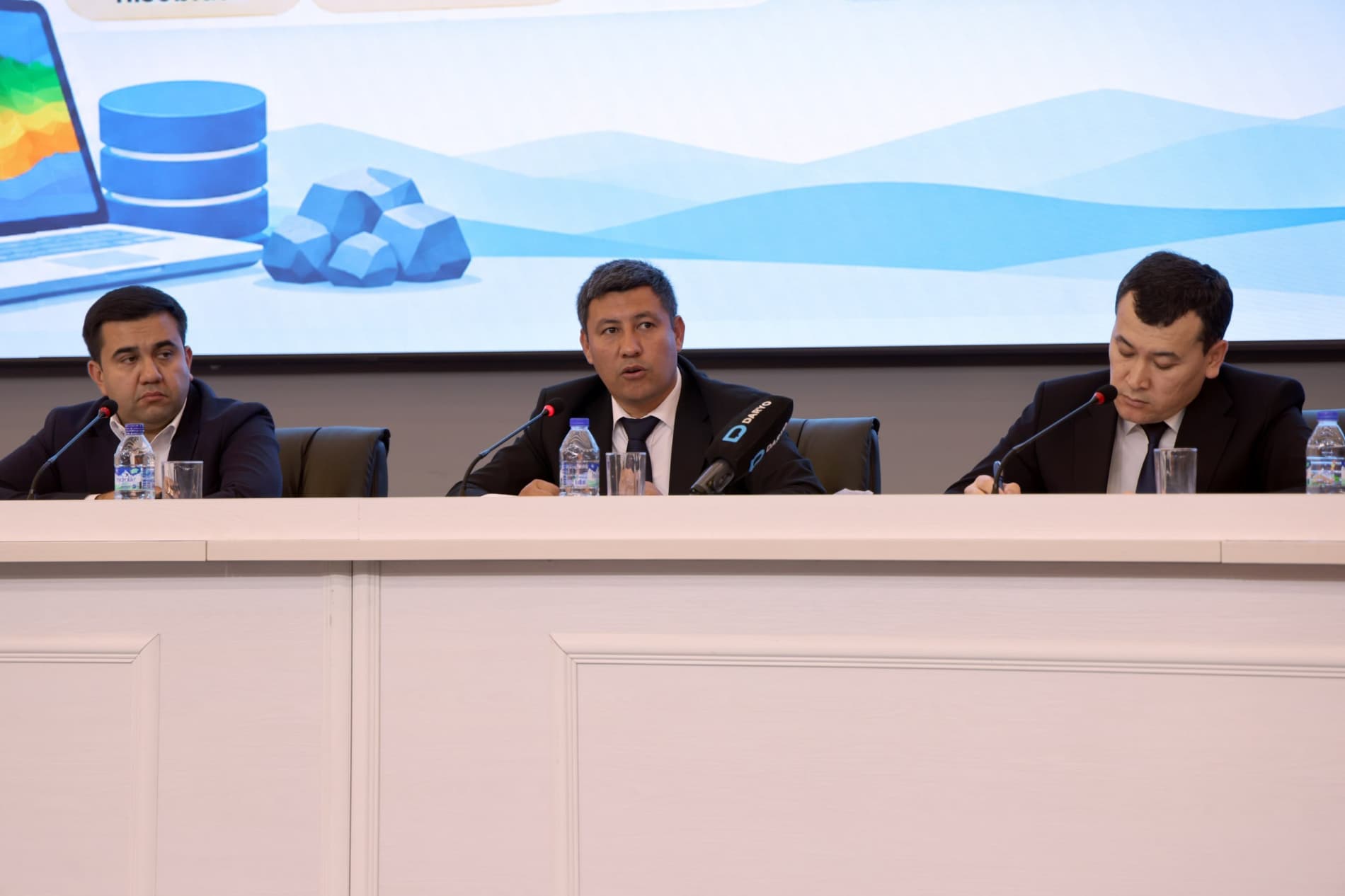
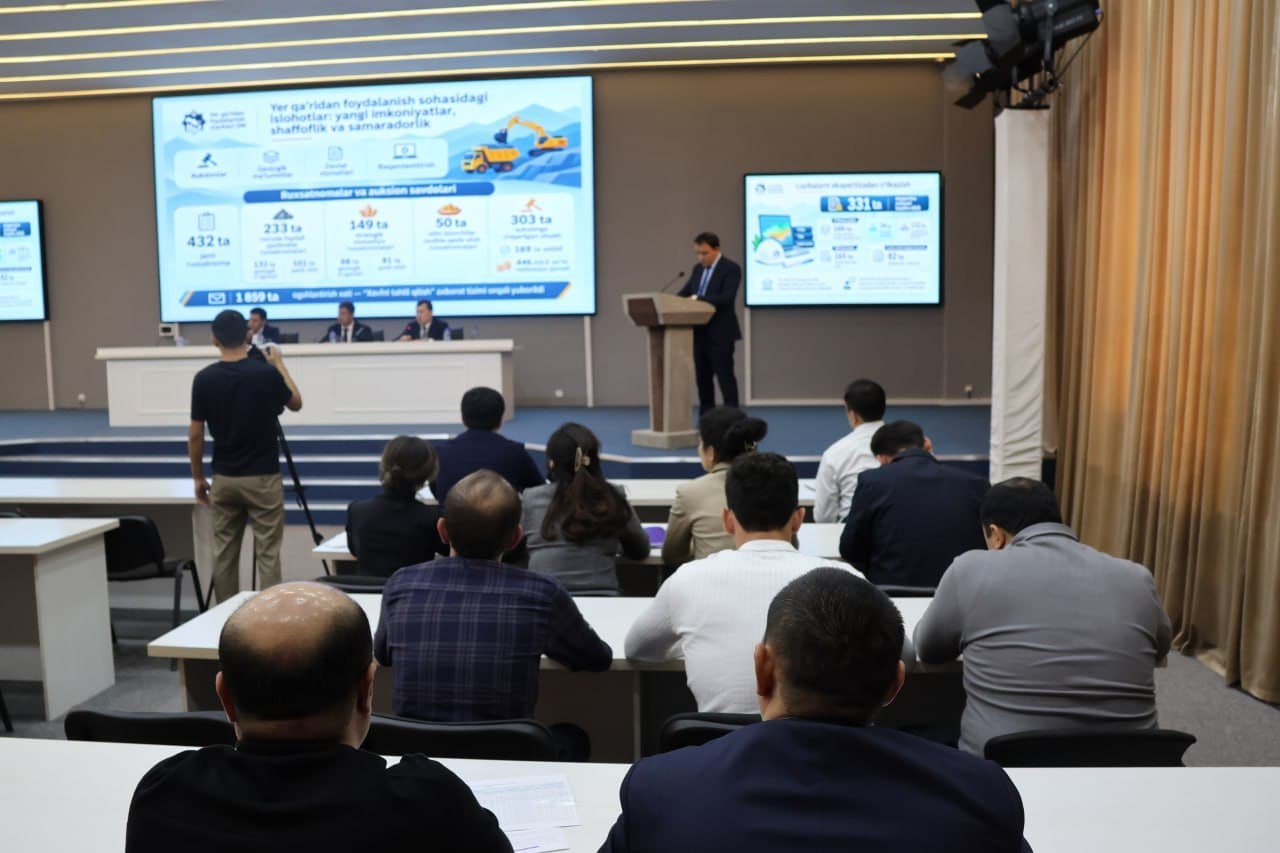
The figures were presented at a press conference held on November 6 at the Content Production Center in Tashkent. The event was organized by the Ministry of Mining Industry and Geology of the Republic of Uzbekistan and the state institution Center for Subsoil Use.
Discussions focused on improving permit procedures, ensuring transparency in electronic auctions, expanding access to geological information, and digitalizing public services.
Participants included Bakhodir Rakhimov, Head of the Ministry's Mining and Geological Control and Non-Metallic Raw Materials Department; Feruz Badalov and Jurabek Azimov, Deputy Directors of the Center; industry specialists, business representatives, and journalists.
During the reporting period, 233 permits were issued for non-metallic mineral resources. Of these, 101 authorized extraction activities and 132 covered geological exploration. Another 149 permits concerned strategic mineral resources, including 68 for geological exploration and 81 for extraction. An additional 50 permits were issued for artisanal gold mining.
The regional distribution of permits for non-metallic minerals was as follows: the Republic of Karakalpakstan — 41; Andijan Region — 13; Bukhara Region — 7; Jizzakh Region — 19; Kashkadarya and Navoi Regions — 35 each; Namangan and Samarkand Regions — 22 each; Syrdarya Region — 1; Surkhandarya Region — 11; Tashkent Region — 10; and Fergana Region — 17.
Of the 303 sites offered for auction, 291 involved non-metallic mineral resources, 9 were designated for artisanal gold mining, and 3 concerned major mineral commodities.
To monitor compliance with permit conditions, the Center issued 1,859 warning letters through the Risk Analysis information system.
A total of 331 expert conclusions were issued for geological projects. These included 166 conclusions on preliminary consolidated technical and economic calculations and 165 on feasibility studies.
Among the 166 preliminary assessments, 34 concerned strategic minerals and 132 involved non-metallic minerals. An additional 82 conclusions were issued on design and cost-estimate documentation.
Under Presidential Resolution No. PQ-104, responsibility for conducting expert assessments of geological projects was transferred to the Center.
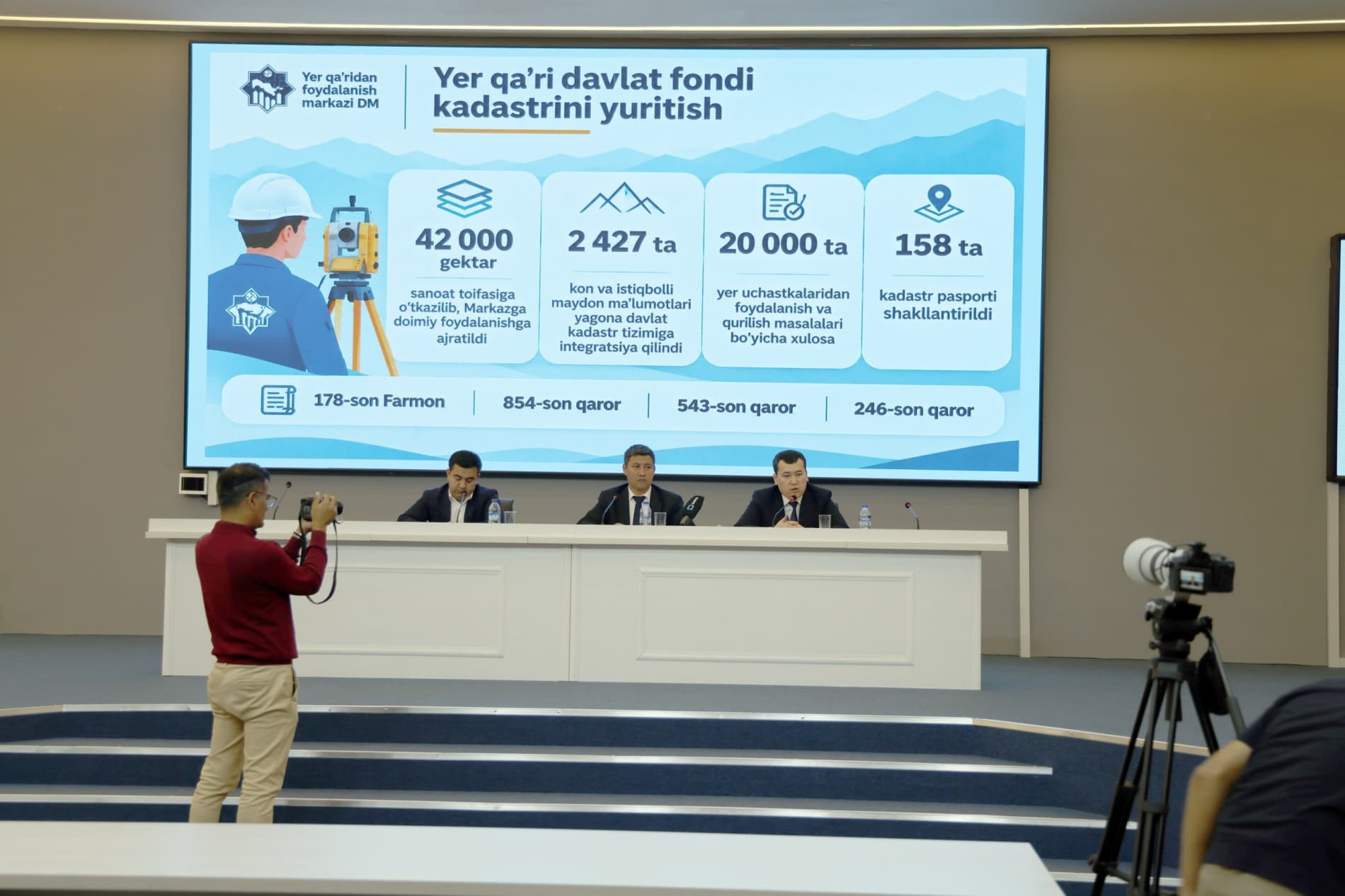
In accordance with Decree No. 178 of the President of the Republic of Uzbekistan dated July 27, 2022, and Cabinet of Ministers Resolutions No. 854 dated December 19, 2024, No. 543 dated August 27, 2021, and No. 246 dated May 15, 2026, a total of 42,000 hectares of land were reclassified as industrial land and allocated to the Center under permanent land-use rights.
Information on 2,427 mineral deposits and prospective areas was integrated into the Unified State Cadastre System. Additionally, 20,000 conclusions were issued concerning land use and construction, and 158 cadastral passports were prepared.
The Center registered 65 geological exploration activities and received 252 geological reports. Of these, 73 concerned activities financed through public funds, while 179 were submitted by business entities.
The geological database was expanded with 1,036 vector graphic datasets and 130 local databases. Another 29 activities were completed in connection with preparing the State Balance of Mineral Reserves.
A total of 1,908 services were provided for access to geological reports and information, including 1,742 for organizations within the ministry's system and 166 for businesses.
Furthermore, 84 international and foreign standards were translated into the state language and submitted to the Standards Institute for review.
Through the Front Office service, 169 businesses received consultations and practical assistance. The 1356 Call Center handled 743 inquiries, while 7 outreach and public reception events were organized across the regions. The Center also published 387 information materials.
As part of digital transformation, information on 278 permits for non-metallic mineral resources was entered into the Geomonitoring information system. Identification numbers were generated for 25 strategic mineral permits, and 125 mineral deposits underwent renewed inventory assessments.
The Mining and Geological Services module is being introduced in stages. Permit issuance through the license.uz platform has also been established, with the platform integrated into Geomonitoring.
These developments indicate growing use of digital tools in permitting procedures, geological data management, and monitoring activities. Such measures may simplify access to information and administrative services for businesses.
At the same time, the effectiveness of permit compliance monitoring should be assessed through the correction of identified violations and the enforcement of lawful operations. Transparent oversight is economically significant for the responsible use of subsoil resources, the protection of economic interests, and the reduction of risks associated with unauthorized mineral extraction.