
Preventing Corruption at the Inspectorate: New Measures Proposed in 6 Key Areas
2026-10-23 16:15:00 / News
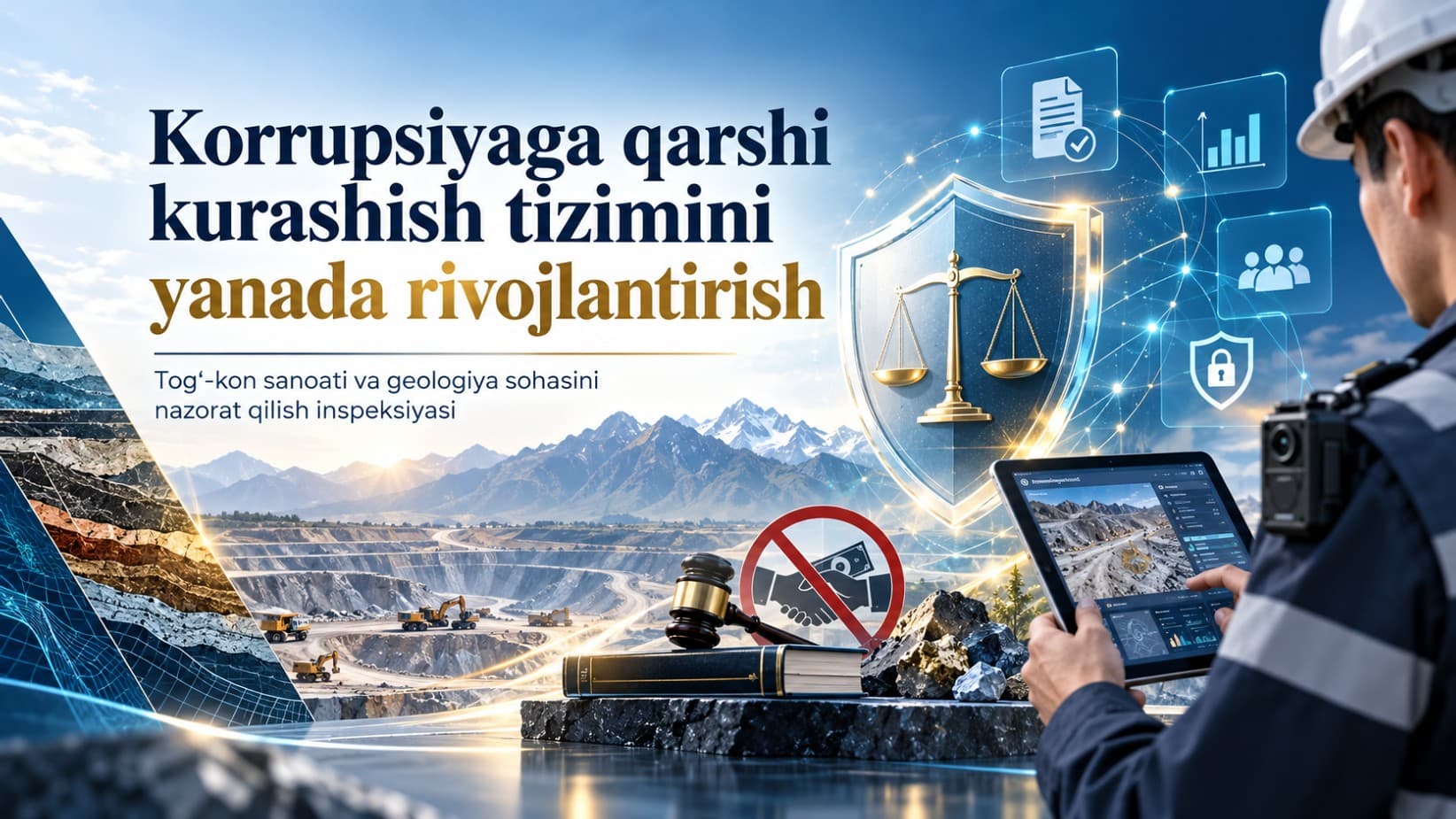
The Inspectorate for Control in the Mining Industry and Geology under the Ministry of Mining Industry and Geology of the Republic of Uzbekistan has developed proposals and an action plan to strengthen its anti-corruption system. The plan focuses on the early detection and prevention of corruption-related offenses and the elimination of factors that create opportunities for such violations.
The proposed measures aim to improve transparency in state inspections, reduce the influence of human factors, and strengthen the personal accountability of employees.
As a first step, positions and functions exposed to high corruption risks will be assessed quarterly. Particular attention will be given to inspection procedures, the imposition of administrative fines, processes related to permits and licenses, and direct interaction with businesses. Based on the assessments, proposals for the internal rotation of employees occupying high-risk positions will be submitted to the Head of the Inspectorate.
To evaluate employees' knowledge of anti-corruption requirements and their level of legal awareness, the plan provides for regular testing. Internal regulatory documents will also be reviewed systematically to ensure compliance with legislation, while their practical implementation will be monitored.
To promote openness, information about anti-corruption activities will be regularly communicated through mass media. Anonymous public surveys are also proposed to assess the causes and trends of corruption risks and evaluate the effectiveness of preventive measures.
One of the main priorities is the digitalization of inspection procedures. In particular, the proposals envisage equipping every state inspector with a body-worn camera and establishing a system that enables responsible managers to monitor inspections remotely in real time.
In addition, inspectors would be able to enter information about identified violations and other findings, statistical indicators, and relevant data directly into an electronic system using tablets during inspections.
The introduction of these mechanisms would improve the documentation of inspection activities, support the objective examination of disputed situations, and help prevent unlawful interference in regulatory procedures.
The effectiveness of the planned measures will depend on their practical implementation, data security, and clearly defined legal procedures for oversight. A transparent inspection system could help establish equal conditions for businesses, reduce corruption risks, and strengthen confidence in lawful economic activity.