
Digitalization in Mining and Geology: A Step Toward Automated Control and Transparency
2026-07-23 14:55:00 / News
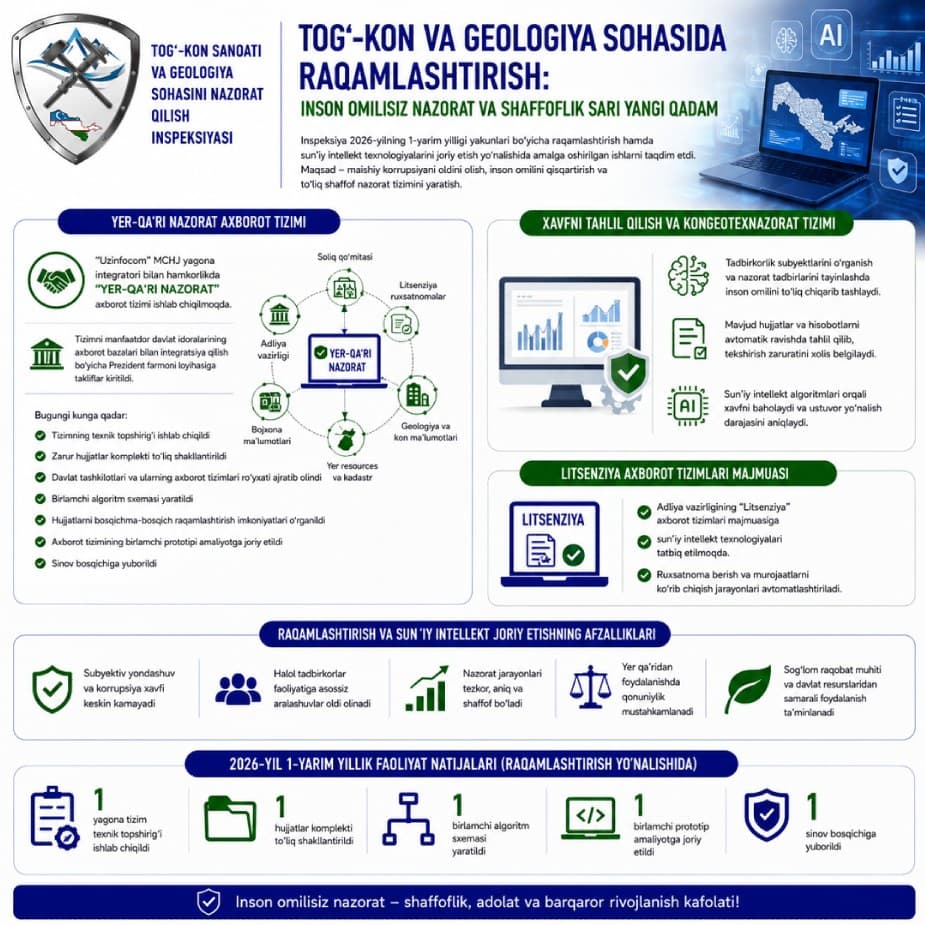
An effective and transparent control system is a primary factor in enhancing the efficiency of state bodies. The Inspection for Control in the Mining Industry and Geology presented its achievements for the 1st half of 2026 regarding digitalization and the implementation of artificial intelligence. The main focus is set on preventing petty corruption, eliminating the human factor in regulatory activities, and ensuring complete process transparency.
To achieve these goals, the Inspection, in cooperation with the Single Integrator "Uzinfocom" LLC, is actively developing the "YER-QA‘RI NAZORAT" information system. Proposals were submitted to the draft Decree of the President of the Republic of Uzbekistan on improving Digital Government operations to ensure the integration of this system with the databases of relevant state agencies.
To date, the technical specifications for "YER-QA‘RI NAZORAT" have been finalized, and a complete package of required documentation has been compiled. Based on the documentation structure, a registry of participating state organizations and their existing IT systems was formed, and an initial algorithm scheme was created. In collaboration with business analysts, the possibilities of step-by-step document digitization were evaluated, resulting in a primary prototype that has been launched for testing.
Additionally, the "Risk Analysis and Congeotechnadzor" information system is under development. This technology completely removes human bias when evaluating business entities and scheduling inspections by automatically analyzing submitted reports and documents. Furthermore, artificial intelligence technologies are being integrated into public services provided via the "License" platform of the Ministry of Justice of the Republic of Uzbekistan, automating the processing of applications and issuance of permits.
The deployment of digitalization and artificial intelligence significantly reduces corruption risks and subjective decision-making in regulatory operations. Automated analytical tools prevent unwarranted interference in legitimate business activities and reinforce compliance in subsoil use. This serves as a vital guarantee for fostering fair competition and ensuring the optimal utilization of state resources.