
Speech by the Director of the Energy Efficiency Agency at the panel session on “Green Growth for Poverty Reduction: Climate-Resilient Solutions and Green Jobs”
2025-09-18 14:10:00 / News
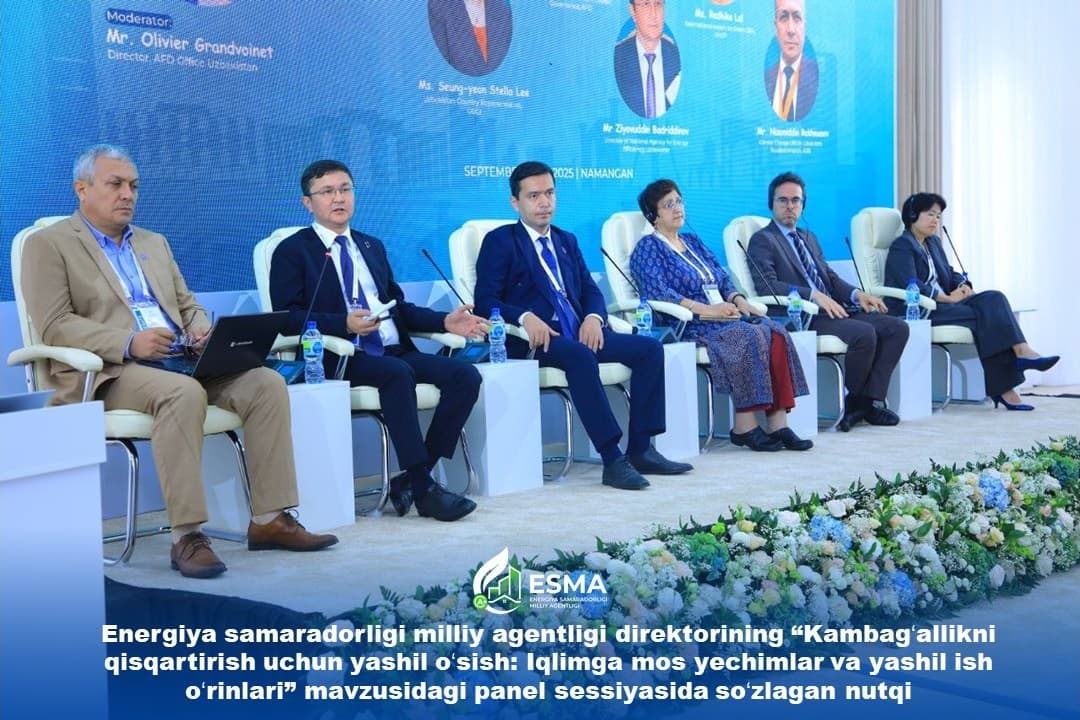
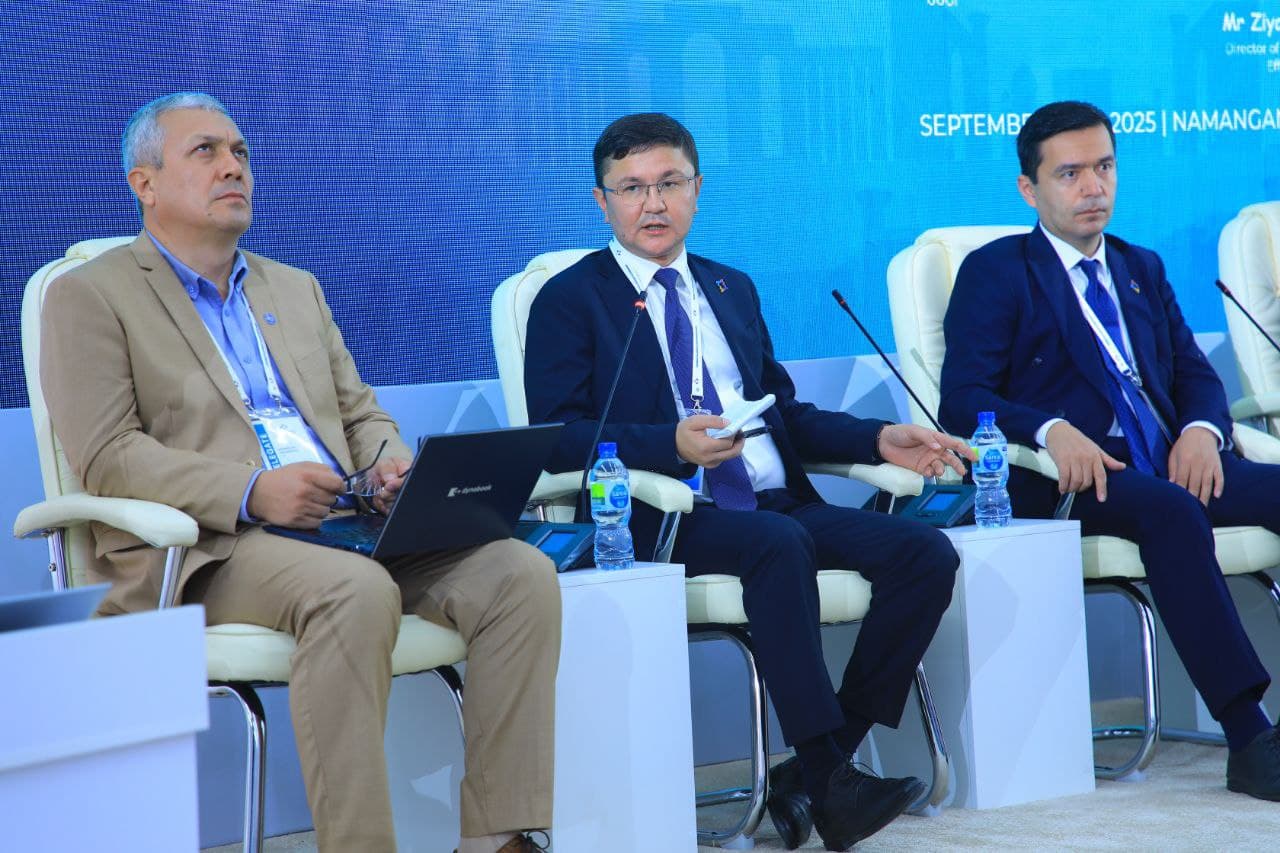
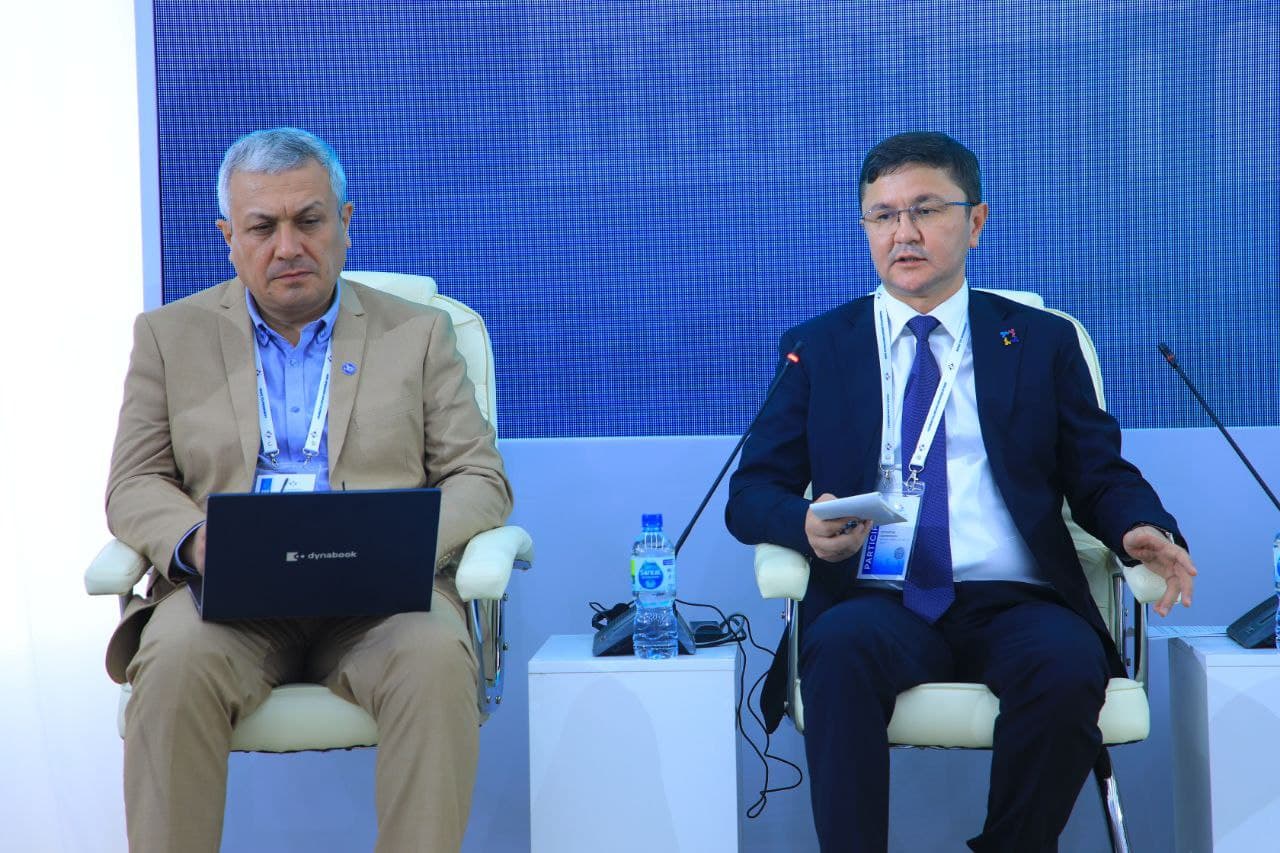
Within the framework of the III International Forum — From Poverty to Prosperity held in Namangan, Uzbekistan, a panel session was organized on the topic “Green Growth for Poverty Reduction: Climate-Resilient Solutions and Green Jobs”.
The session discussed the relationship between poverty and the environment, mitigation of global climate change impacts, social protection systems, sustainable green growth, job creation, and the impact of energy supply on poverty levels.
The session featured a speech by the Director of the National Agency for Energy Efficiency under the Cabinet of Ministers of the Republic of Uzbekistan, Ziyovuddin Badriddinov Bositovich.
In his speech, he noted that the transition to a sustainable green economy is an important task for mitigating the negative impacts of climate change and ensuring the well-being of the population.
Energy efficiency is considered one of the key factors in reducing poverty. Currently, most public buildings in Uzbekistan — particularly kindergartens, schools, and hospitals — were constructed in the 1960s and were not designed to use modern energy-saving technologies.
As a result, the average annual thermal energy consumption of such buildings is about 350 kWh/m². This indicator is 2.4 times higher than the average level in Europe, 3 times higher than in Austria, and 3.7 times higher than in the Netherlands. This not only reduces economic efficiency but also negatively affects the quality of services in education, healthcare, and childcare.
The Government of Uzbekistan has identified ensuring energy security, reducing energy consumption, and transitioning to a green economy as priority development tasks.
Implementation of energy efficiency measures will help create comfortable conditions for children in kindergartens, provide a healthy environment for patient treatment in medical institutions, improve temperature and sanitary conditions, accelerate recovery processes, reduce utility and maintenance costs of budget organizations, improve environmental conditions, and enhance the economic sustainability of regions, while also promoting a culture of rational resource use among the population.
In cooperation with the international community and through attracting concessional funding from international financial institutions, Uzbekistan plans to cover more than 100 hospitals and polyclinics, 400 schools, and 300 kindergartens with energy efficiency improvement measures starting from 2026.
According to international experts, modernization of heating systems can achieve energy savings of up to 20%, while building thermal insulation can increase energy savings up to 40%.
In Uzbekistan, special attention is paid to introducing mechanisms that encourage the population to improve housing energy efficiency and create comfortable living conditions. The implemented Energy Efficiency Improvement Digital Platform of Uzbekistan ensures transparent interaction between the population, energy auditors, and suppliers of energy-efficient equipment.
Through the platform, citizens can select energy auditors and equipment suppliers freely, receive compensation of up to 4 percentage points of interest rates on loans for “green renovation”, and access subsidies for energy-efficient equipment.
The Agency also organizes training seminars for khokim assistants, the “mahalla five”, and the population to promote state energy efficiency policies in the regions, distributes informational materials, and raises awareness about rational energy resource use.
These efforts contribute to stimulating energy saving among the population and accelerating the transition to a green economy.